
Preventing Corruption in Humanitarian Aid Assistance

Emergency relief being delivered

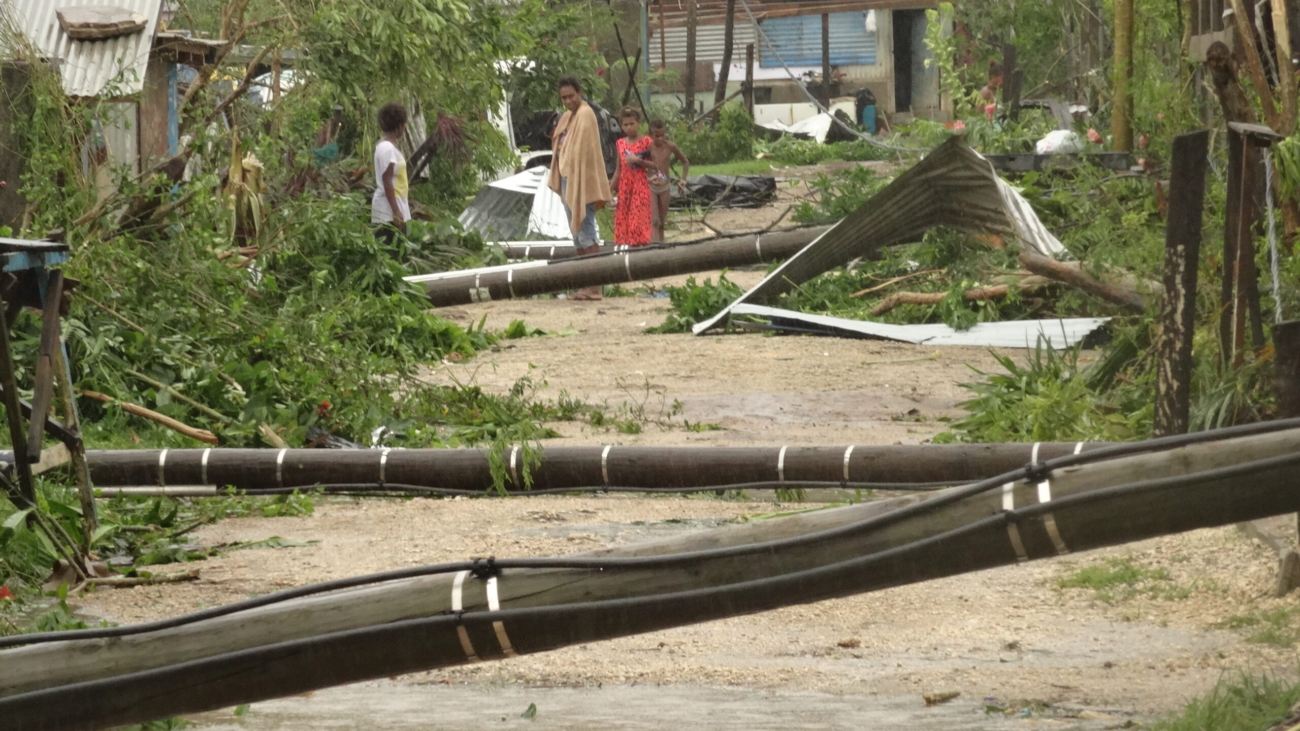
AFTER CYCLONE PAM hit Vanuatu, international aid have been flowing into the country to support people who have been affected by the category 5 storm. Transparency International Vanuatu is concerned about the way humanitarian assistance are being distributed to the people of Vanuatu and the fact that corruption may be involved in some cases.

Humanitarian Assistance Aid can encounter many different corruption risks throughout the program cycle of the aid distribution, it is important to be aware of corruption risks in the process and prevent them from occurring.

Local Intermediaries

Partners and Local Intermediaries is one of the first things to be considered at the beginning of Humanitarian Assistance Aids operations. Humanitarian Aids Assistance has to create relationships with other organizations or appoint someone or a group within a community to help them with the progress of work on the ground.

In Vanuatu, there are local relief committees in each committee. Local relief or camp committees or volunteer groups often play an important role in planning and implementing humanitarian aid projects. Their decisions and actions are key to equitable programmes free from corruption and bias. But, when there is a biased relief committee, reports will be biased thus aid relief will also be biased.

Seafront littered with stones

A biased committee may divert aid from those who most need it towards their families, friends, ethnic or regional group, or those able to pay. To prevent a biased relief committee, it is recommended that committees or volunteers are not given total discretionary power.

It is important for observers and other relevant authorities to make random, surprise visits to observe committees or volunteers in action. It is also important to try to ensure strong female representation on a committee, and that women and minorities are not just present, but that they have a say in decision making.

Targeting Criteria

Consequently when there is a bias in relief committee there will be a bias in the targeting criteria. Thus, aid is effectively wasted as it does not get to the real emergency victims but is diverted to other groups who may have influenced the local relief committee.

Biased staff or local committee relief may deliberately set criteria that are very complex, making it harder for beneficiaries to hold an organization accountable and increasing the opportunities for corruption. To prevent this from happening it is important to use both geographic and administrative criteria.

False Exaggerated or Incomplete Reports

False exaggerated or incomplete reports are likely to be produced by biased staffs or local relief committees. It is very important that all assessment reports be accurate and independent, not biased. This is because the distributions depend on what is written on assessment reports. Thus to prevent false exaggerated or incomplete reports, it is recommended that reports are widely disseminated amongst key people in the organizations and committees to verify accuracy of information. Suspicious reports must be followed up.

Food Aid Kit     

The large volumes and high values involved make emergency food aid highly vulnerable to corruption; bulk foods are hard to identify if diverted corruptly. Throughout the supply chain, staff or partners may divert food for personal use or sale. Poor quality or adulterated food may be delivered by corrupt suppliers, or smaller amounts than contracted for may be supplied. Emergency victims will not receive the right amount of food aid kit they should receive if biased relief committees produce biased reports.

Inventory documents may be falsified and food smuggled out of warehouses or siphoned off during repackaging or

Relief supplies for 15 days

transportation. Local public officials may divert food, forcefully or with staff collusion. Food may be diverted during targeting or registration, through inflation of population figures. Distributors may reduce entitlements, skim food off for later sale, give more than the standard ration and later collect their share, or show bias to certain recipients.

Surpluses may be ‘ordered’ and sold by community leaders. Such practices must not be encouraged as the distribution of aid is progressing in Vanuatu.

Emergency victims deserve to receive the right amount of aid they are entitled to -, not more, not less. So, to prevent such corrupt practices there must be strict procurement policies, implemented by specialist staff. Follow strict prequalification and bid procedures when selecting suppliers; monitor the implementation of contracts to ensure deliveries are not undersized or adulterated. Additionally, humanitarian aid assistance organizations must ensure secure, safe storage and transport of food items, for instance, using formal procedures for arrival and dispatch.

IMG_1031

Moreover, carrying out needs assessment and targeting based on community participation is essential. It is vital to ensure you are reaching intended recipients only and that you publish information transparently. Furthermore, Design and monitor distribution carefully, in collaboration with recipients. Identify secure distribution sites, easily accessed by recipients.

Have signed agreements with staff and partners that food won’t be traded or sold. Encourage use of your complaint mechanism if entitlements aren’t received; investigate all missing goods. Consult the community over likely post-distribution events; tailor food delivery accordingly. And finally, monitor and evaluate your entire supply chain regularly counts as well in the prevention of corruption in distributing food aid kit.

Include spot-checks of storage, transport and distribution in all M&E reports. Make surprise site visits during transit and distributions, examine ration receipts or attendance lists, and verify with recipients that rations received match entitlements. Carry out ‘food basket verification’ and ensure containers are completely empty post-distribution.

Corruption poses a greater risk during situations like this, it is important that, among all the rush to meeting deadlines and ensuring that reliefs are dispatched, the monitoring and fairness of relief efforts must be maintained, and practically sustained throughout the entire relief and rehabilitation timeframe.

A copy of the Publication on : Preventing Corruption in Humanitarian Assistance, can be downloaded here.

Source: Transparency International, 2014, “Preventing Corruption in Humanitarian Aid Assistance”, Humanitarian Assistance, http://www.transparency.org/whatwedo/publication/preventing_corruption_in_humanitarian_operations 
 

Pacific Youth Round Table Discussion

Pacific Youth Must Unite Against Corruption

BREAK THE CHAIN OF CORRUPTION


b

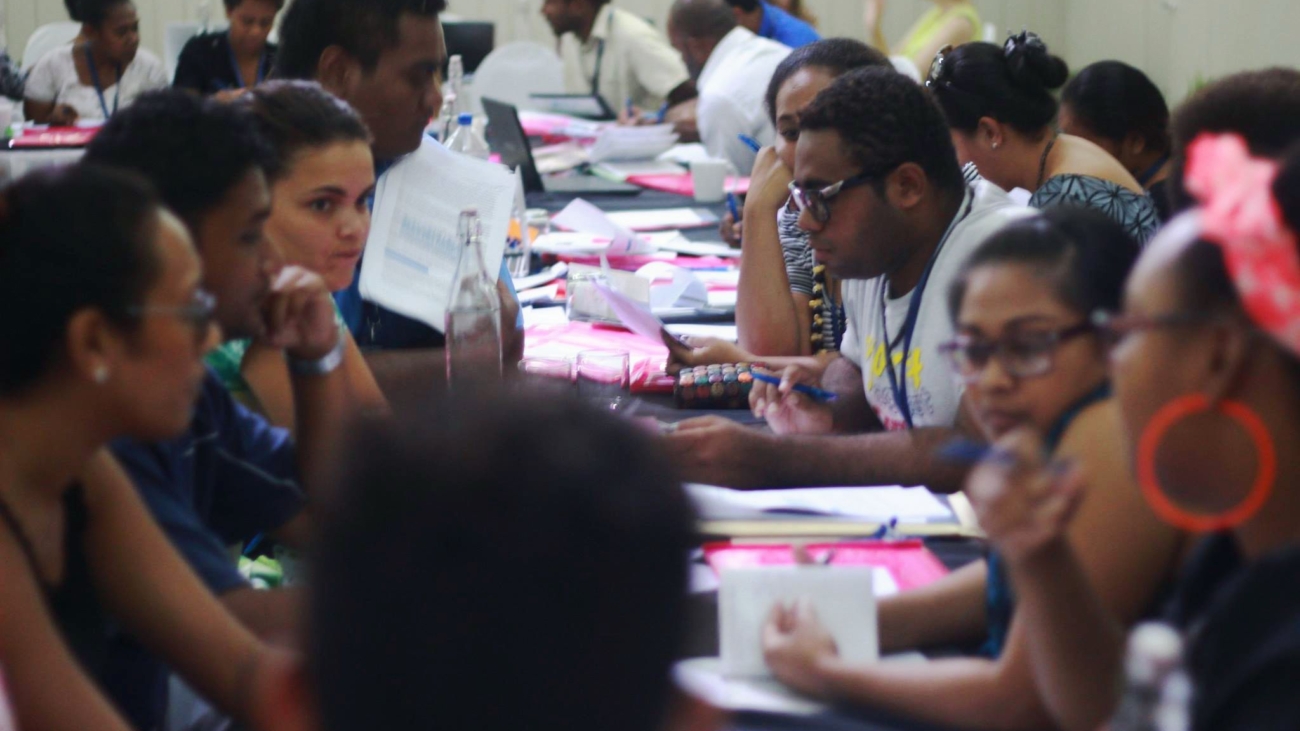
OVER 30 YOUTH leaders representing 14 pacific island nations (Cook Islands, Fiji, Federated States of Micronesia, Kiribati, Nauru, Palau, Papua New Guinea, Republic of the Marshall Islands, Samoa, Solomon Islands, Tonga, Tokelau, Tuvalu and Vanuatu) took part in the first ever Pacific Youth Forum Against Corruption from 22 – 24 February at the Novotel Hotel, Nadi, Fiji.

Participants at the Pacific Youth Forum Against Corruption

The Pacific Youth Forum Against Corruption was organised by the United Nations Development Program (UNDP), the United Nations Office on Drugs and Crime (UNODC), and the Pacific Youth Council.

Vanuatu was represented by Kevin Henry (Transparency international Vanuatu), Prescila Meto (Youth Against Corruption Vanuatu), Mini Miliu (Youth Challenge Vanuatu) and Deffnie Thompson (Vanuatu National Youth Council), the Minister of Lands, the Honourable Ralph Regenvanu also participated in the forum as a presenter.

During the forum it was clear that corruption is a primary obstacle that needs to be addressed more effectively, it was also agreed that the pacific region needs to improve and to initiate more effective efforts by different institutions that are addressing corruption, as this could be instrumental in combating corruption right down to the grassroots level..

Protesting the brutal treatment of West Papuans

With regards to youth groups and advocates, it was emphasized that there is the need for more networking and the sharing of ideas regionally. For example, an anti-corruption tool that is being used in Vanuatu could be more effective in Palau while a program that is being implemented in Papua New Guinea would achieve greater success if done in Vanuatu, thus the sharing of ideas, contacts, tips, and support becomes a vital vein to a more competent and effective push to drive out corruption in each island nation, and to stand united in the region against corruption.

From the anti-corruption forum, the young leaders recognized there is a “limited, or no access to regional or country-specific data and policies relating to corruption (reflecting the need for evidence research based on corruption) due to lack of freedom of information and lack of innovation and independent media reports”, as stated in the forum outcome statement which is still in its draft stages.

It was also acknowledged that “difficulty with regards to sustainability of initiatives on anti-corruption such as youth movements against corruption due to lack of funding geographical isolations” creates a barrier to anti corruption efforts by active youth groups.

11043458_10204581445950291_9214734586042916812_oToday, the youth population in the pacific participate in all the sectors of society; they are police officers, pastors, to even becoming members of parliament. While some youth are fortunate to be awarded scholarships to study overseas, the majority of youth stay back. If you are lucky you can get opportunities to participate in local workshops, youth programs and even get a good job, but some unfortunate groups become vulnerable, and they participate in negative activities, involve in crime, allowing the society to regard them as deviants; a barrier to community development.

Youth from Vanuatu & PNG

It is widely and commonly said that youth are the leaders for tomorrow, therefore it is important to note that whatever experience that youth go through during their upbringing will contribute a lot to how they will define, and present themselves when they hold high and important positions in the community, and nationally. Therefore more informal and local programs need to be developed to assist in promoting a good environment where young people are nurtured to avoid criminal activities.

Transparency International Vanuatu (TIV) has been offering such programs to young people across Vanuatu, through TIV’s Civic Education Program TIV has identified certain factors that continues to encourage young people to keep silent against bad practices.

Firstly, the lack of trust in the political system; TIV asked a young person if he voted in the 2012 general election, and this was his response,

“No, I did not vote, I did not want to waste my time on those candidates. Do you realise what is happening? They promised us ‘no more motions of no confidence’, and look what they have done,”

this statement speaks for a lot of young people, the lack of trust and broken promises creates an environment where uncertainty becomes fact, when young people look towards an uncertain political future they become vulnerable to certain negative practices. TIV has, and will continue to encourage active citizenship, because an effective democracy is the result of a participatory process, everyone has to be involved, even young people.

Secondly, the lack of understanding on citizens basic rights and duties; over the years TIV has delivered hundred of constitution booklets to young people, and in the process informing them of their rights, that if violated, are eligible to lodge their complaint or statement to the appropriate authority.

Transparency International Vanuatu is still offering the Civic Education Program to interested youth groups and communities, call 25715, or email transparency@vanuatu.com.vu to request a workshop or to share your comment. You can also find TIV on facebook: https://www.facebook.com/transparency.vanuatu

Members of the community standing around the petition.

The Mautoa Park Petition

Members of the community standing around the petition.

The Prime Minister is expected to receive the Mautoa Park Petition on Friday 20.


The number of signatories recorded on the Mautoa Park petition has apparently increased to over 3,000 since the petition was launched almost 2 weeks ago, on 7 February, as reported to TIV.

What is a petition?

A petition is a formal written request, typically one signed by many people, appealing to the concerned authority with respect to a particular cause. Petitioning is a powerful tool, and a peaceful way of uniting different people from different backgrounds to stand up against a system, or an event that is regarded by the people as not productive, unhealthy, one sided, or corrupted.

For instance, in 2012, in the United Kingdom a local called Peter Jackson from Fife started a petition after the Fife Council announced the closure of Eden Park, which is a respite centre for children with special needs.

“Please support our petition to prevent Fife Council from closing Eden Park Children’s Respite Centre, The centre provides much needed respite to special needs children and their families,” petitioned the locals.

Fife Council had announced the closure of the centre without consultation with families or staff at the centre. The locals found out about the closure via the media.

They stated that the “action taken by the council is wrong and should be reversed. The children use Eden Park regularly…the children interact with other children in a safe and friendly environment that would not otherwise be afforded.”

In 2013 Peter Jackson reported success. “Thank you to everyone who signed and supported this petition. Fife Council have today sent letters to all the families associated with Eden Park informing them that the facility is remaining OPEN. Your continued support throughout this long and arduous process was greatly appreciated. Thank You.”

(Source: http://www.gopetition.com/success-stories/322/eden-park-children-s-respite-centre-saved.html)

The Mautoa Park Petition

With over 3,000 signatories The Mautoa Park Petition carries a unified representation. Transparency International Vanuatu was told that during a meeting at Mautoa Park this week by the community, it was confirmed that the Prime Minister is expected to receive the petition today, Friday 19.

Despite the allegations of extortion and misappropriation over the management of Mautoa Park, it is interesting that the community have rallied together to “keep the green space along with its management, with the community”.

The Victims & Good Management

From a point of view, it is a rather complicated situation in its own terms, with exchanges of comments on social media and reported misunderstandings, confusions, and allegations.

As a fact, corruption within the community is as rotten as corruption at the national level, it is that idea of ‘knowing that it is wrong, but you do it anyway, and only a few will benefit from it’.

Consequently, the vendors, and the members of the community became the victims when the tables were over turned. Transparency International Vanuatu (TIV) has always been advocating against bad practices and corruption, and through its Advocacy & Legal Advice Centre (ALAC), has spoken and followed up on cases on behalf of victims of corruption.

Empty Market House
Empty Market House

Apart from Mautoa Park TIV has also received complaints regarding the loud noise that were emitted by different groups at the AVL Stage at Freswota field, the sound from the speakers could be heard as far as the Ohlen Whitewood area, clearly this act was already in contrast with the law but nothing was done. The Pollution Control Act of 2013, Part 4, Section 19 states that the:

‘Discharge or emission of pollutants from premises (1) A person must not discharge or emit pollutants from any premises on or onto any land, body of water, foreshore or air so as to result in: (a) unreasonable interference with the health, welfare, or amenity of any other person; or (b) any adverse effect on the environment. (2) A person who contravenes subsection (1) is guilty of an offence punishable on conviction: (a) if the person is an individual – by imprisonment for not more than 12 months, or a fine not exceeding VT4,000,000, or both; or (b) if the person is a body corporate – by a fine not exceeding VT8,000,000.

Therefore, if a person or group is causing discomfort to another person by way of emitting any of the pollutions mentioned above, they are breaking the law, thus they are punishable by imprisonment or a fine. Unfortunately, nothing has been done.

TIV would like to stress that good management of such community institutions must always be a priority. If the groups that had been tasked with managing the market or the AVL stage had not reached the expected expectations, then why did it take too long to intervene? Was there a possibility that the authorities could step in to run several management, and business programs with the community? If there was some form of mentoring program in place that would assist in upgrading management skills, would the story be different? Yes!

It would be interesting to see how the Prime Minister responds to the community petition, given the fact that his government is made of several coalitions, and that he is also the Chairman of the Council of Ministers who approved of the signing over of Mautoa Park and the Freswota Field.

Transparency International Vanuatu advocates against corruption, supports good decision making and promotes good governance in Vanuatu, TIV would like to encourage our leaders, nationally and at the community level, to prioritise the welfare of the people and to work towards a corrupt free, and good governing ideals that will benefit everyone and not only a few.

Empty Tables, Empty Pockets

“I hope that when this petition gets to the Honorable (PM) Joe Natuman, I challenge him, to make sure that this (Mautoa Park) does not get out,” challenged the Opposition Leader.